Choosing a hyperbaric oxygen chamber is an important decision for wellness centers, rehabilitation facilities, sports recovery businesses, distributors, and other professional buyers. With different chamber structures, pressure levels, sizes, and configurations available, selecting the right system requires more than comparing prices.
The best choice depends on your intended application, available installation space, expected usage, operating requirements, and budget.
This guide explains the main types of hyperbaric oxygen chambers, the features buyers should compare, and the questions to ask before purchasing from a hyperbaric chamber manufacturer.
The right hyperbaric oxygen chamber depends on how you plan to use it.
Soft hyperbaric chambers: Flexible configurations, with portable-style options in sitting and lying designs.
Hard hyperbaric chambers: Rigid chamber structures available in different sizes, pressure configurations, and interior layouts.
Single-person chambers: Designed for individual use where space and user capacity are primary considerations.
Multiplace chambers: Designed to accommodate multiple occupants, depending on the model and configuration.
Veterinary hyperbaric chambers: Designed for animal-care environments, with considerations such as patient visibility, cleaning, and animal size.
Before choosing a model, confirm its operating pressure, oxygen delivery method, safety systems, applicable regulatory requirements, and intended use. Not every chamber is suitable for every application.
Hyperbaric oxygen chambers are available in several designs. Understanding their differences helps buyers narrow their options before comparing individual models.
Soft chambers typically use flexible materials and are available in sitting or lying configurations. Some models are designed to be more compact and easier to accommodate in spaces where a large rigid chamber would be impractical.
Depending on the model, features may include a TPU chamber body, zipper sealing systems, pressure gauges, emergency depressurization valves, and supporting air and oxygen equipment.
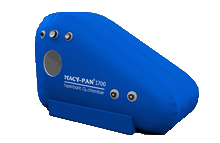
For example, MACY-PAN offers soft chamber models such as the ST801 lying chamber and ST1700 sitting chamber.
These models illustrate how chamber orientation, dimensions, and configuration can be matched to different space and user requirements.
Explore the ST801 Soft Lying Hyperbaric Chamber or the ST1700 Soft Sitting Hyperbaric Chamber.
What to check before buying:
Chamber dimensions and available installation space
Material specifications and pressure ratings
Sealing design and emergency pressure-release provisions
Compressor, oxygen supply, and cooling configuration
Cleaning, maintenance, and operator requirements
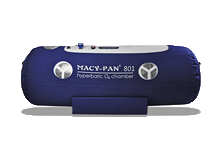
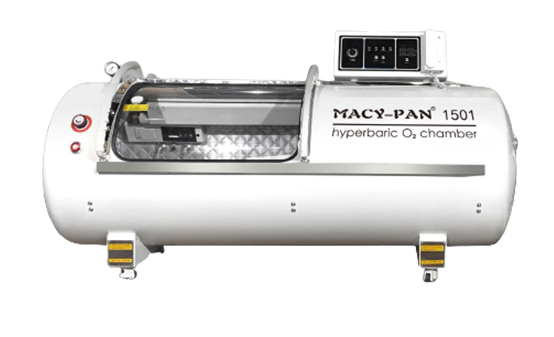
Hard chambers use rigid structures and are available in different sizes, internal layouts, and pressure configurations.
Depending on the model, buyers may find features such as transparent viewing panels, larger internal spaces, different entry arrangements, and configurations designed for professional environments.
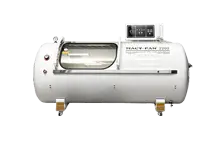
MACY-PAN's HP2202 series provides examples of hard lying chamber configurations.
When comparing hard chambers, do not focus on the exterior appearance alone. Consider the complete system, including its pressure rating, usable internal dimensions, door design, controls, safety features, and service requirements.
Explore the MACY-PAN Hyperbaric Oxygen Chamber Product Range to compare available chamber designs.
Capacity is another important purchasing consideration.
A single-person chamber may be appropriate where individual use and limited installation space are priorities. A multiplace chamber may be more suitable for facilities that require a larger interior or plan to accommodate multiple occupants, subject to the manufacturer's specified capacity and operating procedures.
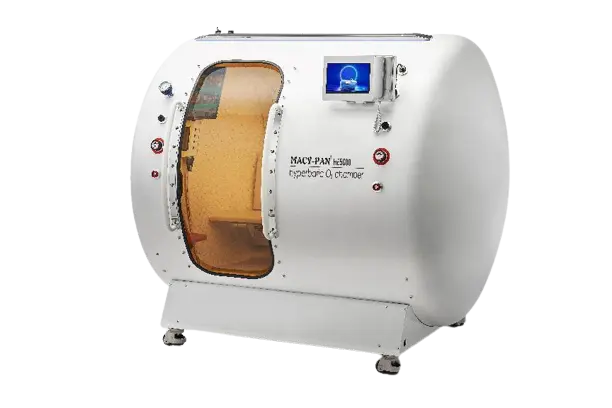
MACY-PAN's HE5000 series includes different multiplace configurations and interior arrangements.
Before selecting a multiplace system, evaluate:
The number of intended occupants
Internal seating or bed arrangements
Overall dimensions and access routes
Electrical and equipment requirements
Installation, maintenance, and operator training
Applicable local regulations and inspection requirements
A higher-capacity chamber is not automatically the better investment. The appropriate configuration depends on actual demand and the facility's operating model.
MACY-PAN offers different hyperbaric oxygen chamber configurations for individual users, professional facilities, and veterinary applications. Comparing specific models can help buyers narrow their options based on chamber type, operating pressure, dimensions, and intended use.
The following table provides an initial comparison of selected models. Confirm the latest technical specifications with MACY-PAN before making a purchasing decision.
| Model | Chamber type | Listed operating pressure | Listed dimensions / capacity | Key features |
| ST801 | Soft, lying | 1.3 / 1.4 / 1.5 ATA | 225 × 80 × 80 cm | Flexible chamber structure, lying design, transparent windows |
| ST1700 | Soft, sitting | 1.3 / 1.4 / 1.5 ATA | 170 × 70 × 110 cm | Sitting configuration, folding-chair option, internal pressure gauge |
| HP2202-85 | Hard, lying | 1.5 / 1.6 / 2.0 ATA options | 85 cm diameter model designation; verify exact configuration | Rigid chamber structure, lying design, intelligent control screen |
| HE5000 Series | Hard, multiplace | 1.6–2.0 ATA, depending on configuration | Multiple configurations; selected models accommodate 1–6 people | Multiple seating layouts, larger internal space |
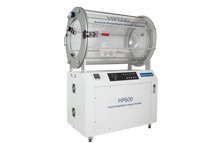
| HP600 | Veterinary chamber, medium | 1.4 ATA listed on the dedicated product page | Product page lists 110 × 60 × 150 cm | Transparent chamber, integrated supporting equipment |
| HP800 | Veterinary chamber, large | 1.4 ATA | 110 × 80 × 150 cm listed | Larger listed external dimensions, transparent chamber, integrated supporting equipment |
Operating pressure is one of the most important technical specifications when evaluating a hyperbaric oxygen chamber.
Pressure is commonly expressed in atmospheres absolute (ATA). Different chamber models are designed for different operating pressures, and the available range varies by product.
For example, MACY-PAN's product portfolio includes soft chamber models with listed operating pressures of approximately 1.3–1.5 ATA, as well as selected hard chamber configurations offering higher pressure ratings.
These specifications should not be treated as interchangeable treatment protocols.
Before making a purchase, clarify the following:
What operating pressure does the intended application require?
Is the pressure specification stated in ATA or gauge pressure?
What oxygen concentration and delivery method does the system support?
What safety controls are provided for pressure regulation and release?
Does the model meet the requirements applicable to the intended market and use?
Higher pressure does not automatically mean a chamber is more appropriate or more effective for every user. Medical treatment decisions and operating protocols should be determined by appropriately qualified healthcare professionals.
A hyperbaric oxygen chamber is a complete pressurized system. Its construction and safety provisions deserve careful attention.
Material selection influences chamber construction, cleaning requirements, durability, and maintenance.
Soft chamber models may use flexible materials such as TPU, while hard chamber models may use rigid structural materials and transparent viewing panels.
Buyers should request material specifications, applicable test documentation, cleaning instructions, and information about the expected service life of relevant components.
Viewing windows can help operators observe occupants during a session. Interior dimensions also influence comfort, accessibility, and the practicality of entering and exiting the chamber.
When comparing models, check the actual usable internal space rather than relying only on external dimensions or product photographs.
Ask the manufacturer to explain how the chamber monitors pressure and manages abnormal operating conditions.
Depending on the model, relevant provisions may include pressure gauges, pressure-control mechanisms, automatic pressure-relief devices, and emergency depressurization controls.
Request documentation describing the function of each safety device, the required maintenance schedule, and the appropriate emergency procedures.
The chamber itself is only one part of the system.
Depending on the model, supporting equipment may include:
An air compressor
An oxygen concentrator or specified oxygen supply
An air-cooling system
Pressure-control equipment
Monitoring and control components
Confirm which components are included in the quotation and which are optional. This helps prevent unexpected costs when planning installation.
Installation conditions can significantly affect the final purchase decision.
Before requesting a quotation, measure the available room and consider the entire installation process.
Important questions include:
Can the chamber pass through the building's doors and corridors?
Is there sufficient space for the chamber and its supporting equipment?
Does the room meet the electrical and ventilation requirements?
Is the floor suitable for the equipment's total weight?
Is there enough clearance for operation, cleaning, and maintenance?
Can the equipment be serviced without major disruption?
For wellness centers and rehabilitation facilities, it is also helpful to consider how the equipment fits into daily workflows.
For example, a compact single-person system and a larger multiplace chamber may have very different installation, staffing, and operating requirements.
Discuss these conditions with the manufacturer before finalizing the model.
A low initial quotation does not necessarily represent the lowest total cost of ownership.
When comparing hyperbaric chamber manufacturers, evaluate the complete supply arrangement.
| Evaluation factor | Questions to ask |
| Product range | Does the manufacturer offer the chamber type and configuration you need? |
| Technical documentation | Are detailed specifications, operating instructions, and maintenance requirements available? |
| Safety provisions | Are pressure-control and emergency procedures clearly documented? |
| Customization | Can dimensions, interior layouts, or selected configurations be adjusted? |
| Warranty | What components are covered, and for how long? |
| Spare parts | Are replacement parts available, and what are the expected lead times? |
| Technical support | What installation guidance, training, and after-sales support are provided? |
| Shipping | What packaging, shipping, insurance, and delivery arrangements are included? |
| Compliance | Which certifications and regulatory documents apply to the exact model and destination market? |
It is also important to distinguish between a manufacturer, distributor, and reseller.
Working directly with a manufacturer may make it easier to discuss product configurations, technical specifications, customization, and production requirements. However, buyers should still verify the manufacturer's capabilities, documentation, service arrangements, and contractual responsibilities.
MACY-PAN offers a range of hyperbaric oxygen chamber configurations for different space, capacity, and application requirements.
Rather than relying on a single chamber design, the product range includes several categories.
The portfolio includes soft and hard chamber designs, allowing buyers to compare flexible and rigid configurations according to their installation conditions and intended use.
Different chamber orientations can accommodate different user preferences and room layouts. Buyers can compare sitting and lying models based on internal dimensions, access, and operating requirements.
The product range includes single-person and multiplace options. This allows facilities to assess equipment according to their intended capacity rather than assuming one chamber configuration suits every business.
MACY-PAN also offers veterinary hyperbaric chambers, including the HP600 and HP800 models.
Their transparent chamber designs support visual observation, while different configurations help buyers assess suitability for the animal sizes and workflows encountered in veterinary environments.
Learn more about the HP600 Veterinary Hyperbaric Chamber and the HP800 Veterinary Hyperbaric Chamber.
For professional buyers, the next step is to compare the specifications of the relevant models and confirm which configuration fits the intended application.
Before placing an order, prepare a clear set of requirements to make supplier quotations easier to compare.
Product requirements
Intended application and user group
Soft or hard chamber preference
Sitting, lying, or multiplace configuration
Required internal dimensions and capacity
Target operating pressure and oxygen delivery requirements
Installation requirements
Available room dimensions
Door and access measurements
Electrical supply
Space for supporting equipment
Delivery and installation conditions
Commercial requirements
Target budget
Required delivery date
Warranty coverage
Spare parts and maintenance arrangements
Training and after-sales support
Shipping terms and destination market
Documentation requirements
Product specifications
Operating and maintenance manuals
Applicable certificates and test reports
Safety instructions
Warranty terms
Documents required by local regulators
Providing this information at the quotation stage helps manufacturers recommend a suitable configuration and reduces the risk of overlooking important requirements.
Soft chambers use flexible chamber materials and are available in different sitting and lying designs. Hard chambers use rigid structures and may offer different internal layouts and pressure configurations. The appropriate choice depends on the intended application, required specifications, installation conditions, and applicable regulations.
There is no single pressure setting suitable for every application. Operating pressure should be selected according to the intended use, the specific chamber's approved specifications, and applicable professional guidance and regulatory requirements.
Compare technical documentation, manufacturing capabilities, safety provisions, warranty coverage, spare parts availability, technical support, delivery arrangements, and relevant regulatory documentation. Verify these details for the exact model you intend to purchase.
Some chamber models are marketed for home or wellness settings, but suitability depends on the specific equipment, intended use, applicable regulations, and the user's circumstances. Do not assume that a chamber is appropriate for unsupervised medical treatment. Follow the manufacturer's instructions and seek qualified medical guidance where relevant.
Yes. MACY-PAN lists veterinary chamber models including the HP600 and HP800. Buyers should compare their dimensions, specifications, safety provisions, cleaning requirements, and suitability for the animals and veterinary workflows involved.
Selecting a hyperbaric oxygen chamber requires a clear understanding of the intended application, chamber design, pressure specifications, capacity, safety provisions, installation conditions, and long-term support.
Start by defining your requirements, shortlist suitable chamber configurations, and request comparable quotations from manufacturers. Verify technical documentation and applicable regulatory requirements before making a final decision.
MACY-PAN provides a range of chamber designs for buyers to explore. If you are evaluating equipment for a wellness facility, professional setting, or veterinary application, contact the MACY-PAN team with your requirements to discuss available models and configurations.
Ready to compare hyperbaric oxygen chamber options?
Explore MACY-PAN Hyperbaric Oxygen Chambers or contact the team to request product specifications and a quotation for your project.
Disclaimer: This article provides general equipment-selection information and is not medical advice. Hyperbaric oxygen therapy should be used only for appropriate indications under qualified professional guidance. Product specifications and regulatory status should be verified for the exact model and intended market.

Discount Price, ship by DHL, door to door service, 5-7days delivery time, local technical support

We supply soft and hard chambers from 1.3-2.0ATA to reach different customers' needs

Create custom uniquea hyperbaric chambers to reach your target market

We have more than 50 distributors around world, looking forward to having you on board.

 français
 Deutsch
 italiano
 العربية
 čeština
 Suomi
 Polska
 עברי